[ad_1]


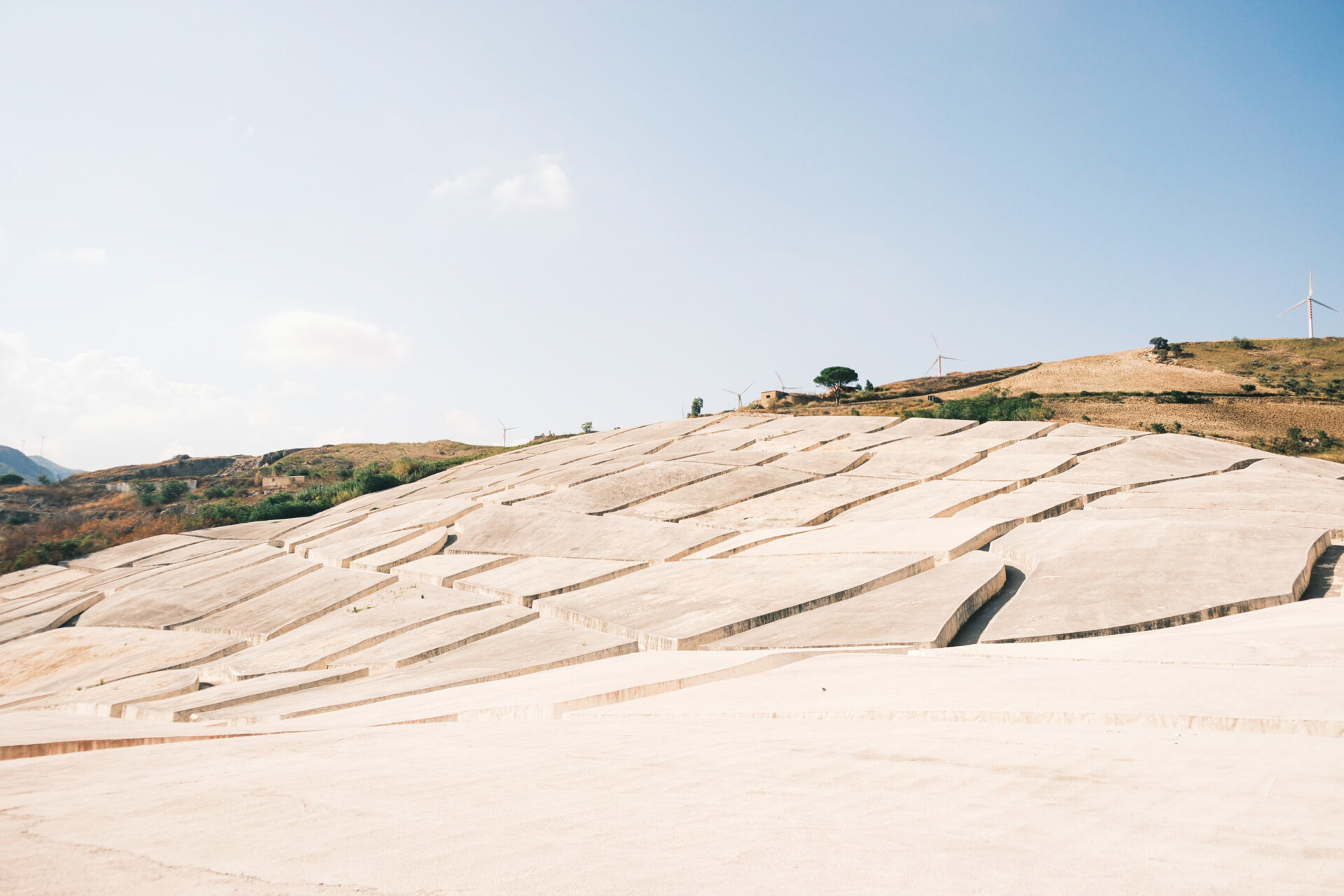
Deep in the center of Sicily is Il Grande Cretto; A work of art integrated in the natural landscape that acts as a monument to the city of Gibellina.
Whether Cretto di Burri, Cretto di Gibellina or Il Grande Cretto, all refer to the same work of art in western Sicily. This is the sculpture/work of land art initiated by Alberto Burri in 1984 and completed in 2015 and has a secret, although the track is in the name; The great crack or the Gibellina crack.
Where the city of Gibellina used to lie, until it was destroyed in an earthquake in 1968, Il Grande Cretto now occupies its place.
Il Grande Cretto is a magnificent but brutalist sample of protest in the form of a large wave of cement through the sicker of the Sicilian mountain. In an impressive area of the field, it would be a mistake not to take a look at this form of works of art. Think what the hell is that? Ask why? That I think is the exact objective of Burri’s work and I am here to provide that context, as well as photographs of my moving time exploring the cracks between the concrete blocks.


Il Grande Cretto – Gibellina
The city of Gibellina
Before 1968, the city of Gibellina was another city in the mountains of western Sicily. It goes back to medieval times, life here focused on agriculture and became the home of up to 100,000 residents, although for the 1960s, the population was only 6,000. Most families were poor and worked hard to make a living. Unfortunately, everything changed for these families on the night of January 14/15, 1968, when a massive earthquake hit and completely destroyed the city. More than 400 people died and those who were lucky enough to survive were homeless.
The city of Gibellina became debris in an instant. The lives were destroyed.
Unfortunately, the government felt that it was not worth rebuilding the city in its current location and, therefore, made the executive decision to rebuild a modern city of Gibellina 20 km west in a place that already had road access and trains.
Therefore, in just ten years, the new city of Gibellina was built and incorporated pieces of modern art, as well as a Museum of Modern Art. The artists from all over Italy were invited to create new pieces for the city and one of them was the famous artist, Alberto Burri.


Alberto Burri
Alberto Burri was born in 1915 in the Umbria region of Italy and began painting during his time as a prisoner of war in the United States in World War II. Channeling his experiences of war, Burri developed his own unique painting style in which he included the use of materials such as tar and fabric. However, a trip to Death Valley in the US. It was the turning point for Burri with its intrigue because of the way the heat of the sun created cracks on the ground. Burri began a series of works known as ‘Cretto’ or cracks. In the 1980s, Burri was a known artist on the international stage.
Burri was invited by the mayor of Gibellina to produce works of art for the public, but his invitation was ignored. After finally giving up and accepting a tour, Burri was not like to add any work of art.
However, he also visited the old ruins of Gibellina that had not been touched for more than 15 years from the earthquake and almost immediately the concept was born. A work of land in Burri’s unique style that preserves all the ruins of Gibellina.
The work of art
As of 1984, after obtaining the approval of the locals, Burri began to work on the creation of the mass concrete monument. The ‘cracks’ follow the old road system and, therefore, each of the blocks (about 10-20 meters on each side and 1.6 meters high) represent literal blocks of the old town. The ruins were left in place, personal possessions and all, before being covered by tons of cement. Gibellina mausoleum.
The project was not completed until 2015 and is now a place worthy of its time when visiting Sicily. We spent a few hours in Il Grande Cretto, wandering the cracks in silence and contemplating what tragedy this city had seen. The work of art is huge; 8,000 square meters of Sicilian mountain are covered with cement. You can walk to the hillside, by the empinus embankment, to what would have been the highest point of the city that offers a spectacular view throughout the work of art, through field miles and through Nouvo Gibellina.
The city of Gibellina will never be forgotten thanks to Il Grande Cretto de Burri.


How to get to Il Grande Cretto
Il Grand Cretto is reached better by car or a full -day tour, since public transport does not seem so far. The site is approximately 70 km from Palermo, a 1 hour and 10 minutes trip, and approximately 60 km from Trapani, although the unit may take a little longer. There are buses ranging from Palermo to Nuovo Gibellina and training from Trapani, although it does not seem to be the most accessible city if you are planning a brief one -day trip. I would definitely recommend hiring a car if you are looking to explore here and beyond.
Where is it?
11 big places to eat in Palermo
A guide for the Zingaro Natural Reserve
A guide from Mazara del Valle
In the streets: Mazara del Vallo
In the streets: Palermo
The 10 best bars in Palermo
The best things to do in Trapani
A guide to visit Archaeological Selinunte Park
Guide to the city of Palermo: 17 things to do in Palermo
A Sicilian food guide: what to eat in Sicily
Read more than my latest articles below
If you enjoyed ‘Explore Il Grande Cretto in Gibellina, Sicily’ Why not fix the images below?


Keep in mind that some bonds in this blog are affiliate links.
Yes you Go buy something through these links, I can receive a small commission at no additional cost for you.
If you enjoy what you’ve seen You can buy me a coffee or beer here.
[ad_2]
